Dahlia Basics
Dahlia Care
Dahlias are incredible flowers—vibrant, versatile, and easy to grow!
With just a few simple steps, you can set them up for success
and enjoy a season full of stunning blooms.
Here’s everything you need to get started:
Anatomy of a Tuber
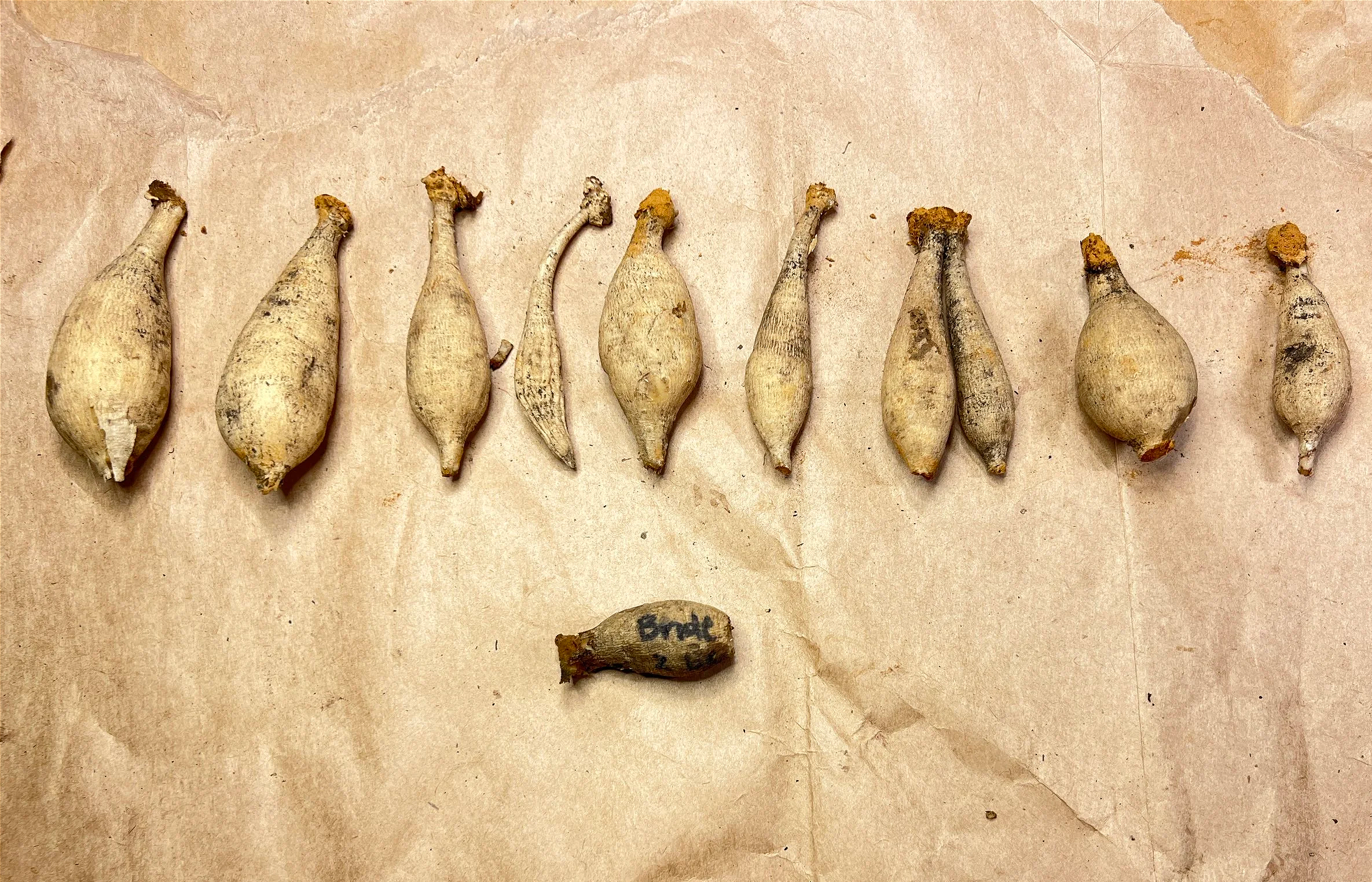
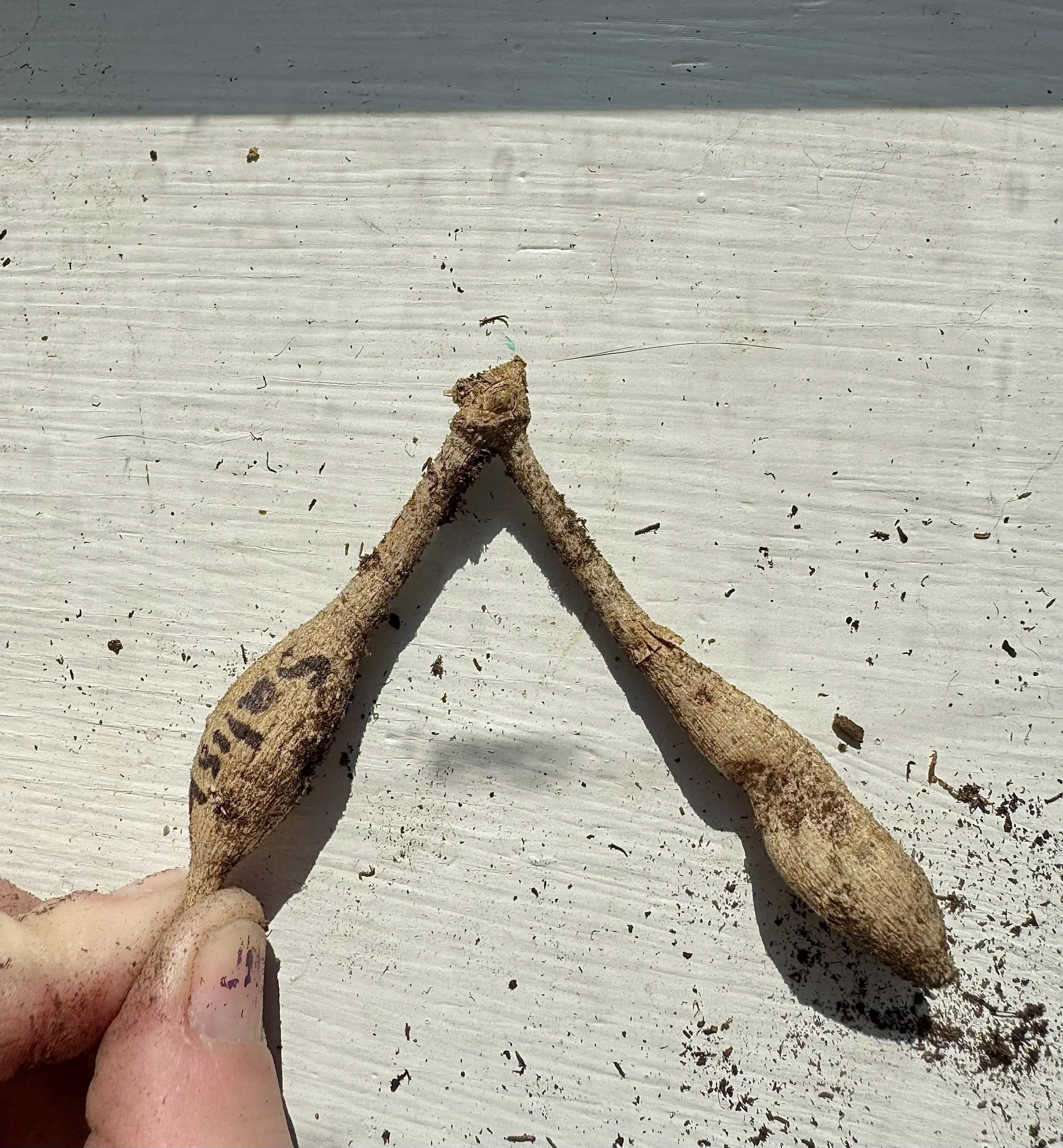
First thing's first, upon receiving your dahlia tuber, inspect it carefully. It should contain a body, crown, and an eye (or growth point) for it to be viable and grow. If your tuber arrives a little wrinkly, that's okay, it’s had a a long winter sleep and will be ready for planting as soon as your last frost date.
Our dahlia tubers are guaranteed to have a body, crown, and eye, and will be at least the size of an AA battery. While it may seem that bigger tubers are better, that's not always true. As shown in the image, a small tuber (1.5" long by 1" wide) produced 10 larger tubers. Plant strength and productivity are not determined by tuber size.
Timing
Plant tubers after the last frost in well-draining soil. Adding bone meal is optional. Choose a spot with 6–8 hours of sunlight.
If not planting immediately, store tubers in a cool place with peat moss, vermiculite, or soil/compost to prevent drying out. Sprouting before planting is normal—just keep them in the medium until it's time to plant.
Plant
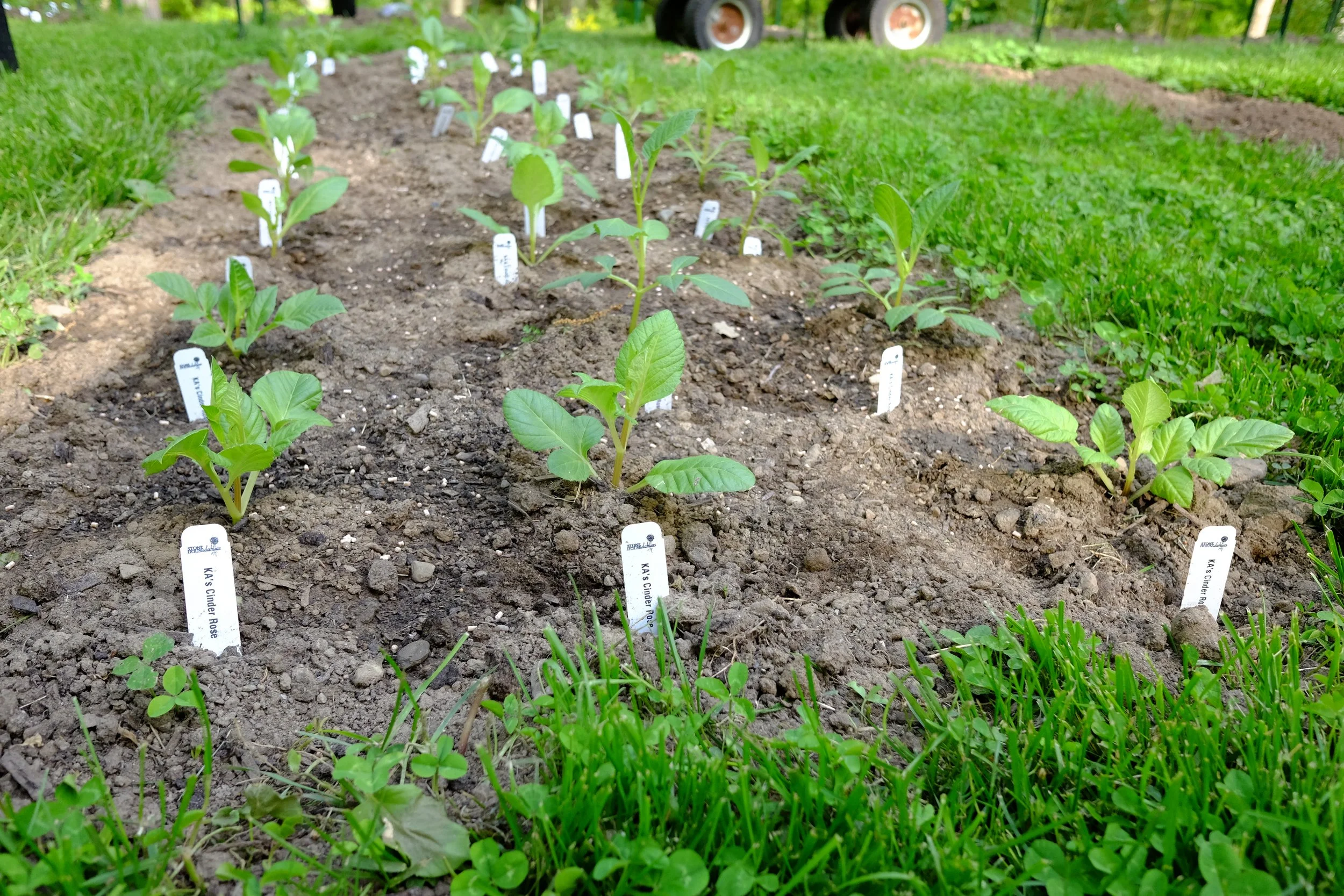
Plant tubers in moist but not wet soil, 4–6 inches deep. Lay the tuber horizontally with the eye (growth point) facing up and cover with soil. If planting multiple tubers, space them at least 12 inches apart. Dahlias oftentimes need support. Stake your dahlias at the time of planting to support them during the season.
Water
DO NOT WATER until your dahlia sprout emerges and has produced one set of leaves.
In the early stages of growth, tubers lack root systems to absorb water and are prone to rot. Once established, water deeply 2–3 times per week.